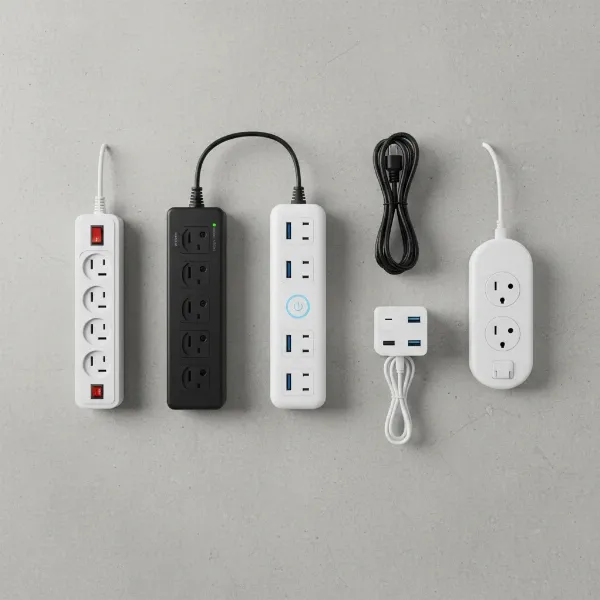
In our gadget-filled lives, managing multiple devices often leads us to seek solutions for expanding available power outlets. Two common devices often confused are power strips and surge protectors. While they may appear similar at first glance, their fundamental functions and levels of protection are vastly different, making the choice between them crucial for the safety and longevity of your electronics. Understanding these differences is key to making an informed decision that safeguards your valuable equipment.
What is a Power Strip and Why Do You Need It?
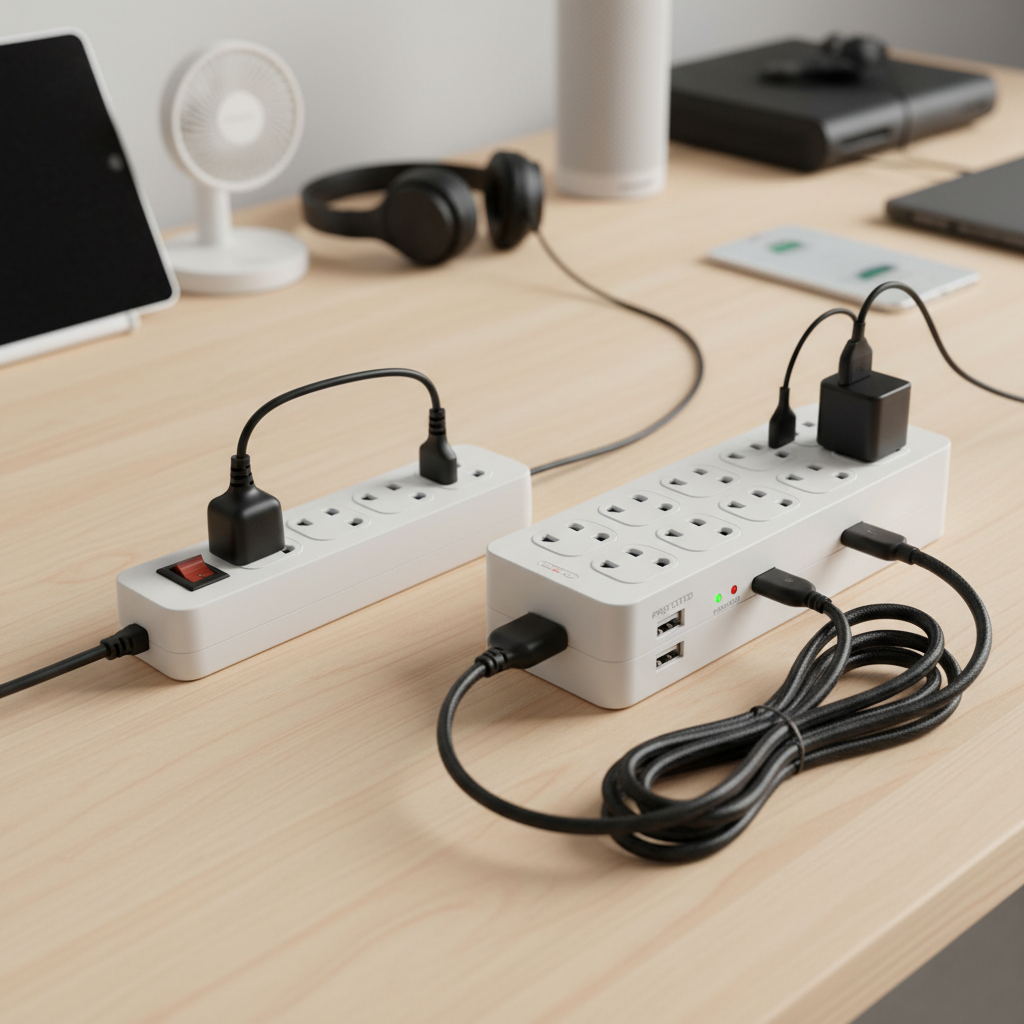
A power strip is essentially an extension of your wall outlet, designed to convert a single electrical socket into multiple outlets. Its primary function is to provide convenience by expanding the number of devices you can plug into one location. Typically, a power strip consists of an elongated casing with several receptacles, a power cord, and a plug to connect to a wall outlet.
The main benefit of a basic power strip is its ability to centralize power for multiple devices, decluttering your workspace and making it easier to manage cables. They are ideal for connecting low-power, non-sensitive electronics or appliances that do not require protection from electrical fluctuations. Common devices suitable for a standard power strip include lamps, phone chargers, small fans, or basic kitchen appliances like a coffee maker or toaster (though not simultaneously if they draw high current). It’s important to remember that a basic power strip offers no inherent protection against voltage spikes or power surges.
Power Strip vs. Surge Protector: Understanding the Core Difference
The critical distinction between a power strip and a surge protector lies in their protective capabilities. While all surge protectors are, by definition, also power strips because they provide multiple outlets, not all power strips are surge protectors. A standard power strip simply provides more sockets without any internal mechanism to protect connected devices from electrical anomalies.
A power surge is a sudden, temporary increase in voltage that flows through an electrical circuit. These spikes can be caused by various factors, including lightning strikes, power grid fluctuations, or the cycling on and off of large appliances within your home. Even small, frequent surges, often unnoticeable, can degrade your electronics over time, shortening their lifespan.
A surge protector, on the other hand, is specifically engineered to shield your electronics from these damaging voltage spikes. Inside a surge protector are components, most commonly Metal Oxide Varistors (MOVs) or Gas Discharge Arrestors (GDRs). When a power surge occurs, these components detect the excess voltage and quickly divert the extra electricity away from your connected devices and into the ground wire. This action prevents the damaging voltage from reaching and frying sensitive internal circuits.
Key specifications for surge protectors include the Joule rating and clamping voltage. The Joule rating indicates how much energy the surge protector can absorb before it fails; a higher rating (e.g., 1000+ Joules for critical devices) means more robust and longer-lasting protection. Clamping voltage is the level at which the surge protector activates and diverts excess voltage. Surge protectors also have a finite lifespan; their protective components degrade with each surge absorbed. Most experts recommend replacing them every 3-5 years, or immediately after a significant power event, especially if they have a “protection status light” that indicates failure.
[image-1|power-strip-vs-surge-protector|Illustration showing the difference between a basic power strip and a surge protector protecting electronics|
A clear visual comparison. On one side, a basic power strip with multiple devices plugged in, labeled “Power Strip – No Protection.” On the other side, a surge protector with sensitive electronics (laptop, TV), labeled “Surge Protector – With Protection.” Show a lightning bolt striking in the background on the surge protector side, with a shield icon over the connected devices. Realistic, clean, infographic style.]
Types of Power Strips and Their Applications
The market offers a diverse range of power strips, each designed with specific features to cater to different needs, from basic power expansion to advanced device protection and smart home integration.
Basic Power Strip (Standard Extension Cord)
A basic power strip is the simplest form, offering multiple outlets from a single wall socket. It’s essentially a multi-outlet extension cord.
- Description: Provides additional AC outlets; no surge protection.
- Pros: Inexpensive, widely available, provides convenient access to more outlets.
- Cons: Offers zero protection against power surges, potential for overloading circuits if not used carefully.
- Suitable Uses: Low-power devices like lamps, phone chargers, basic fans, small radios, or temporary power needs where electronics are not sensitive or valuable.
|
Our Picks for the Best Power strip in 2026
As an Amazon Associate I earn from qualifying purchases.
|
||
| Num | Product | Action |
|---|---|---|
| 1 | Belkin 12-Outlet Surge Protector Power Strip w/ 12 AC Outlets & 8ft Flat Plug, UL-Listed Heavy-Duty Extension Cord for Home, Office, Travel, Computer, Laptop, Charger - 3,940 Joules of Protection |

|
| 2 | Surge Protector Power Strip - Nuetsa Flat Plug Extension Cord with 8 Outlets and 4 USB Ports, 6 Feet Power Cord (1625W/13A), 2700 Joules, ETL Listed, Black |
|
| 3 | KMC 6-Outlet Surge Protector Power Strip 2-Pack, 900 Joules, 4-Foot Extension Cord, Overload Protection, Black |
|
| 4 | 6Ft Power Strip Surge Protector - Yintar Extension Cord with 6 AC Outlets and 3 USB Ports for for Home, Office, Dorm Essentials, 1680 Joules, ETL Listed, (Black) |
|
| 5 | Power Strip, ALESTOR Surge Protector with 12 Outlets and 4 USB Ports, 6 Feet Extension Cord (1875W/15A), 2700 Joules, ETL Listed, Black |
|
| 6 | Anker Power Strip with 2100J Surge Protector, Outlet Extender, 5ft Extension Cord with Multiple Outlets, 12 AC, 2 USB A,1 USB C Port for 20W, Home Office, Dorm Room Essentials, TUV Listed |
|
| 7 | 6 Ft Surge Protector Power Strip - 8 Widely Outlets with 4 USB Ports, 3 Side Outlet Extender with 6 Feet Extension Cord, Flat Plug, Wall Mount, Desk USB Charging Station, ETL,White |
|
| 8 | Wall Charger, Surge Protector, QINLIANF 5 Outlet Extender with 4 USB Charging Ports, 3-Sided 1680J Power Strip Multi Plug Adapter Spaced for Home Travel Office |
|
| 9 | Surge Protector Power Strip - HANYCONY 8 Outlets 4 USB (2 USB C) Charging Ports, Multi Plug Outlet Extender, 5Ft Braided Extension Cord, Flat Plug Wall Mount Desk Charging Station for Home Office ETL |
|
| 10 | Power Strip Surge Protector, Olcorife Ultra Thin Flat Plug Extension Cord 5ft, 6 Outlets 3 USB Ports(1 USB C), 3 Sided Outlet Extender for Home Office Travel Dorm Room Essentials, White |
|
Surge Protector (Surge Suppressor)
This type combines the multi-outlet functionality of a power strip with crucial protection against power surges.
- Description: Includes internal components (MOVs) to divert excess voltage away from connected devices.
- Pros: Essential protection for valuable and sensitive electronics, prevents damage from voltage spikes, often includes status indicator lights.
- Cons: Generally more expensive than basic power strips, protective components degrade over time and require replacement, not effective against direct lightning strikes or sustained over-voltage.
- Suitable Uses: Computers, monitors, televisions, gaming consoles, home theater systems, routers, at-home medical devices, and any valuable electronic equipment.
Smart Power Strip
Leveraging smart home technology, these power strips offer advanced control and energy management features.
- Description: Often Wi-Fi enabled, allowing remote control of individual outlets via a smartphone app, scheduling, and energy monitoring.
- Pros: Enhanced convenience, energy saving capabilities, can integrate with smart home ecosystems (e.g., Alexa, Google Assistant), often includes surge protection and USB ports.
- Cons: Higher cost, requires Wi-Fi connectivity, setup can be more complex.
- Suitable Uses: Smart homes, home offices where scheduling device power is beneficial, managing entertainment systems efficiently.
USB Power Strip
Designed for the modern age of USB-powered devices, these strips combine traditional AC outlets with integrated USB charging ports.
- Description: Features standard AC outlets alongside USB-A and/or USB-C ports for direct device charging.
- Pros: Eliminates the need for multiple USB wall adapters, convenient for charging smartphones, tablets, and other USB-powered gadgets, often includes surge protection.
- Cons: AC outlets may be limited in number, USB charging speeds can vary.
- Suitable Uses: Desktops, nightstands, travel, any area with a high density of USB-chargeable devices.
Travel Power Strip
Compact and versatile, travel power strips are designed for portability and international compatibility.
- Description: Small form factor, often with universal outlets or interchangeable plugs for different regions, may include USB ports and basic surge protection.
- Pros: Convenient for travel, reduces the number of adapters needed, ensures access to multiple outlets on the go.
- Cons: Often have lower Joule ratings for surge protection, may not support all high-power appliances depending on destination’s voltage.
- Suitable Uses: Business travelers, tourists, digital nomads, ensuring connectivity in hotels or cafes.
Heavy-Duty Power Strip
Built for demanding environments, these strips offer enhanced durability and higher power capacity.
- Description: Robust casing (often metal), long cords, higher amperage ratings, sometimes with resettable circuit breakers.
- Pros: Extremely durable, suitable for tools and industrial equipment, can handle higher power loads.
- Cons: Bulky, more expensive, often lacks advanced features like smart control.
- Suitable Uses: Garages, workshops, construction sites, server racks, or areas requiring rugged, reliable power distribution for powerful tools.
Comparison Table: Power Strip vs. Surge Protector and Other Types
| Feature / Type | Basic Power Strip | Surge Protector | Smart Power Strip | USB Power Strip | Travel Power Strip | Heavy-Duty Power Strip |
|---|---|---|---|---|---|---|
| Primary Function | Outlet expansion | Outlet expansion + surge protection | Smart control + outlet expansion | USB charging + outlet expansion | Portable outlet expansion | Durable outlet expansion |
| Surge Protection | No | Yes (Joule rating varies) | Often Yes | Often Yes | Basic/Limited | No (focus on durability) |
| Cost | Low | Moderate to High | High | Moderate | Moderate | Moderate to High |
| Ideal Use | Lamps, chargers, non-sensitive items | PCs, TVs, gaming consoles, sensitive electronics | Smart homes, energy management | Desktops, nightstands, USB devices | Travel, hotel rooms, portability | Workshops, garages, industrial |
| Special Features | On/off switch | Joule rating, indicator lights | Wi-Fi control, scheduling, energy monitoring | USB-A/C ports | Compact, universal plugs | Durable casing, high amperage |
| Lifespan | Indefinite | 3-5 years or after major surge | Indefinite (internal electronics) | Indefinite | Indefinite | Indefinite |
How to Choose the Right Power Strip for Your Needs (Buying Guide)
Selecting the appropriate power strip goes beyond simply counting the number of outlets. A thoughtful approach ensures both convenience and the safety of your valuable electronics.
Assess Your Device Sensitivity and Value
This is the most crucial step. For high-value electronics such as desktop computers, laptops, televisions, home theater systems, or gaming consoles, a surge protector is non-negotiable. These devices contain sensitive microprocessors that can be easily damaged by even minor voltage fluctuations. Conversely, for low-value, non-sensitive items like lamps, simple phone chargers (without the phone itself), or basic fans, a standard power strip may suffice. Consider the replacement cost and potential data loss if a device were to be damaged. Additionally, if you live in an area prone to thunderstorms or frequent power fluctuations, investing in robust surge protection is a wise decision for all critical electronics.
Technical Specifications to Consider
Delving into the technical details ensures the power strip meets your specific power requirements and safety standards.
- Joule Rating (for Surge Protectors): Look for a higher Joule rating for more protection. For critical equipment, aim for 1000 Joules or more; 2000+ Joules is ideal for high-end electronics.
- Number and Type of Outlets: Count the number of devices you need to plug in. Consider if you need a mix of standard AC outlets, USB-A, or USB-C ports. “Brick-friendly” spacing (wider gaps between outlets) is also useful for accommodating bulky power adapters.
- Amperage/Wattage Capacity: Ensure the power strip can handle the total power draw of all connected devices. Overloading can lead to overheating and fire hazards. Check the maximum wattage or amperage rating on the strip and compare it to your devices’ requirements.
- Safety Certifications: Always choose products with recognized safety certifications like UL (Underwriters Laboratories) in North America, CE in Europe, or similar standards in your region. This indicates the product has met rigorous safety testing.
- Cord Length: Select a cord length that comfortably reaches your wall outlet without needing an extension cord, which can compromise safety and protection.
Brands and Pricing
Reputable brands often signify better quality, reliability, and adherence to safety standards. While they might come with a higher price tag, the cost of replacing damaged electronics far outweighs the savings from a cheap, uncertified power strip. Some well-known brands in the power accessory market include Belkin, APC, Tripp Lite, and Anker. Prices vary significantly based on features like surge protection levels, number of outlets, smart capabilities, and brand reputation. Invest wisely based on the value of the equipment you intend to protect.
User Reviews and Expert Opinions
Before making a final purchase, take time to read user reviews and consult expert opinions. Real-world feedback can offer valuable insights into a product’s performance, durability, and any potential shortcomings. Look for consistent positive feedback regarding reliability and actual surge protection performance. Review sites, tech blogs, and consumer watchdog organizations can be excellent resources.
Top 3 Power Strips to Consider
While specific product recommendations can become quickly outdated, here are three types of power strips that consistently offer excellent features and value for different user needs, highlighting what to look for:
-
High-Joule Surge Protector with Coax/Ethernet Protection:
- Description: An advanced surge protector designed for comprehensive protection of a home office or entertainment center. It features multiple widely-spaced AC outlets, a high Joule rating (2000+), and additional protection for data lines like coaxial cable (for TV/internet) and Ethernet ports (for network devices).
- Why choose this: Ideal for safeguarding entire setups, including computers, monitors, modems, routers, and high-end audio/visual equipment from both power and data line surges. Look for diagnostic indicator lights to confirm active protection.
- Example Features to Seek: 10-12 AC outlets, 2000+ Joules, 6 ft+ cord, UL certified, coax and Ethernet protection.
-
Smart Wi-Fi Power Strip with Individual Outlet Control:
- Description: A smart power strip that connects to your home Wi-Fi network, allowing you to control each outlet independently via a smartphone app or voice commands (e.g., Google Assistant, Alexa). Many also include USB charging ports and surge protection.
- Why choose this: Offers unparalleled convenience and energy efficiency. You can schedule devices to turn on/off, monitor energy consumption, and control appliances remotely. Great for creating a “smart” workspace or managing devices that draw standby power.
- Example Features to Seek: 4-6 individually controllable AC outlets, 2-4 USB ports, compatible with major smart home platforms, surge protection.
-
Compact USB-C Travel Power Strip with Multiple Plugs:
- Description: A small, lightweight power strip designed for travel, often featuring a compact design with two to three AC outlets, multiple USB-A ports, and at least one high-power USB-C port (for fast charging laptops or modern smartphones). Some models come with interchangeable international plugs.
- Why choose this: Essential for modern travelers who carry multiple gadgets. It eliminates the need for numerous bulky adapters and wall chargers, providing a centralized and efficient charging hub while on the go.
- Example Features to Seek: 2-3 AC outlets, 2-3 USB-A, 1 USB-C (PD 30W+), compact size, universal voltage compatibility, foldaway plug or interchangeable adapters.
Safe Usage and Maintenance of Power Strips
Proper usage and regular maintenance are crucial for ensuring the safety and longevity of your power strips and the devices connected to them.
First and foremost, never “daisy-chain” power strips or surge protectors – meaning, do not plug one into another. This practice can easily overload a circuit, leading to overheating, electrical fires, and serious safety hazards. Always plug power strips directly into a wall outlet.
Secondly, avoid overloading any power strip or surge protector. Each device has a maximum wattage or amperage rating. Connecting too many high-power appliances (like space heaters, microwaves, or hair dryers) to a single strip can exceed this rating, causing the strip to overheat. Always check the power requirements of your devices and the capacity of your strip.
For surge protectors, regularly check their status indicator lights. Many quality surge protectors include a light that indicates the protection is active. If this light is off, or if the strip has endured a significant power surge (like a nearby lightning strike), the protective components (MOVs) may have been compromised or “sacrificed” to save your devices. In such cases, the surge protector will still function as a basic power strip, but it will no longer offer surge protection. It should be replaced immediately. Even without a major event, surge protectors degrade over time and are generally recommended for replacement every 3-5 years to ensure optimal protection.
Finally, place power strips and surge protectors in locations where they are not covered or prone to physical damage. Ensure they are not positioned in areas where they could be exposed to moisture or extreme temperatures. Keep cords neatly arranged to prevent tripping hazards and ensure good ventilation around the strip.
“Many people mistakenly believe all power strips offer protection. This misconception can put thousands of dollars worth of electronics at risk. Always verify a product’s surge protection rating, especially for sensitive devices.” — Dr. Eleanor Vance, Electrical Engineering Professor.
Conclusion
Distinguishing between a basic power strip and a surge protector is paramount for safeguarding your electronic investments. While power strips offer convenient outlet expansion for low-power, non-sensitive items, only surge protectors provide the critical defense against damaging voltage spikes that can fry valuable electronics. By understanding the protective mechanisms, comparing types, and considering your specific needs and the value of your devices, you can make an informed choice. Always prioritize safety and sufficient protection over cost savings, especially for your most cherished gadgets.
Are you confident you’re using the right power accessory for every device in your home?
Câu Hỏi Thường Gặp
How can I tell if a power strip has surge protection?
A true surge protector will explicitly state “surge protector” or “surge suppressor” on its packaging and device itself, often alongside a Joule rating and indicator lights for protection status. Basic power strips will not have these designations.
Can a surge protector protect against a lightning strike?
While a surge protector offers robust protection against common power surges, it provides limited defense against a direct lightning strike. For comprehensive protection against such extreme events, a whole-house surge protector installed at your electrical panel, in conjunction with point-of-use surge protectors, is recommended.
Do surge protectors wear out over time?
Yes, the Metal Oxide Varistors (MOVs) inside surge protectors degrade with each surge they absorb, reducing their effectiveness. Most surge protectors have a lifespan of 3-5 years or after a significant power event. Regularly check the “protection status” light, and replace the unit if it indicates failure or after its recommended lifespan.