In an increasingly connected world, where every gadget from your smartphone to your smart TV demands power, the humble electrical outlet often feels like the bottleneck. You find yourself constantly juggling plugs, searching for an available socket, or worse, resorting to unsafe practices just to keep everything running. This common frustration highlights a crucial decision: when should you rely on the simplicity of a wall outlet, and when is a power strip the smarter, safer choice? Understanding the fundamental differences and the specific advantages each offers is key to efficiently and securely powering your devices. This article will guide you through the world of power distribution, helping you make informed decisions for your home and office, ensuring your electronics are protected and your spaces remain organized.
What is a Power Strip and Why Do You Need One?
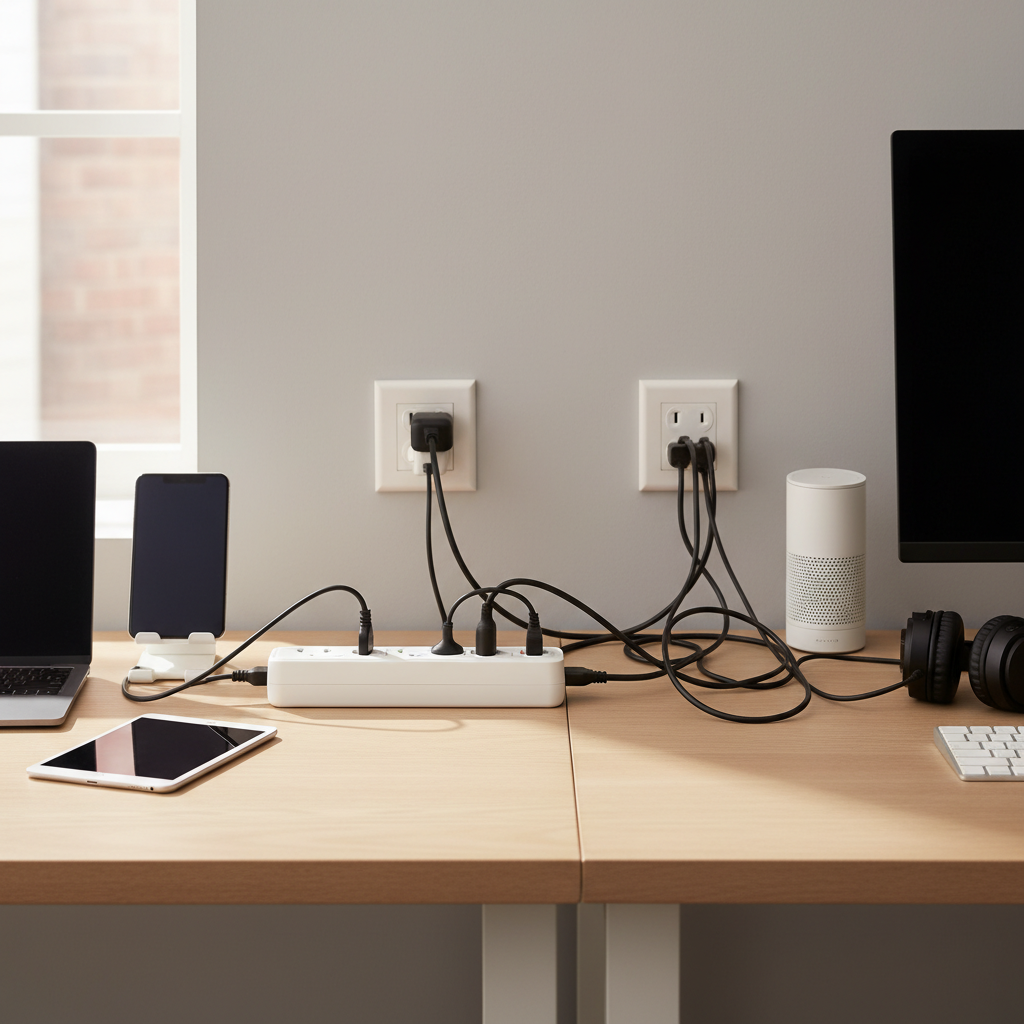
A power strip, also known by names such as multi-socket, power board, or outlet strip, is essentially a block of electrical sockets attached to a flexible cable, allowing multiple electrical devices to be powered from a single wall outlet. Its core function is to expand the number of available sockets in a specific location, addressing the modern dilemma of having more devices than direct wall connections. They serve as convenient hubs for powering various electronics, from personal computers, monitors, and printers in a home office to entertainment systems with TVs, gaming consoles, and soundbars.
The primary benefit of a power strip is its ability to centralize power for multiple devices, reducing cable clutter and making it easier to manage connections. While a basic power strip simply provides more outlets, many modern versions come equipped with additional features like surge protection, USB charging ports, and individual switches for each outlet, enhancing both convenience and safety.
Types of Power Strips on the Market
The market offers a diverse range of power strips, each designed to cater to specific needs and provide varying levels of functionality and protection. Choosing the right type depends on your devices, environment, and desired features.
Basic Power Strip
|
Our Picks for the Best Power strip in 2026
As an Amazon Associate I earn from qualifying purchases.
|
||
| Num | Product | Action |
|---|---|---|
| 1 | Surge Protector Power Strip - HANYCONY 8 Outlets 4 USB (2 USB C) Charging Ports, Multi Plug Outlet Extender, 5Ft Braided Extension Cord, Flat Plug Wall Mount Desk Charging Station for Home Office ETL |

|
| 2 | Belkin 12-Outlet Surge Protector Power Strip w/ 12 AC Outlets & 8ft Flat Plug, UL-Listed Heavy-Duty Extension Cord for Home, Office, Travel, Computer, Laptop, Charger - 3,940 Joules of Protection |
|
| 3 | Surge Protector Power Strip - Nuetsa Flat Plug Extension Cord with 8 Outlets and 4 USB Ports, 6 Feet Power Cord (1625W/13A), 2700 Joules, ETL Listed, Black |
|
| 4 | Anker Power Strip with 2100J Surge Protector, Outlet Extender, 5ft Extension Cord with Multiple Outlets, 12 AC, 2 USB A,1 USB C Port for 20W, Home Office, Dorm Room Essentials, TUV Listed |
|
| 5 | 6Ft Power Strip Surge Protector - Yintar Extension Cord with 6 AC Outlets and 3 USB Ports for for Home, Office, Dorm Essentials, 1680 Joules, ETL Listed, (Black) |
|
| 6 | KMC 6-Outlet Surge Protector Power Strip 2-Pack, 900 Joules, 4-Foot Extension Cord, Overload Protection, Black |
|
| 7 | Power Strip Surge Protector, Olcorife Ultra Thin Flat Plug Extension Cord 5ft, 6 Outlets 3 USB Ports(1 USB C), 3 Sided Outlet Extender for Home Office Travel Dorm Room Essentials, White |
|
| 8 | 6 Ft Surge Protector Power Strip - 8 Widely Outlets with 4 USB Ports, 3 Side Outlet Extender with 6 Feet Extension Cord, Flat Plug, Wall Mount, Desk USB Charging Station, ETL,White |
|
| 9 | Power Strip, ALESTOR Surge Protector with 12 Outlets and 4 USB Ports, 6 Feet Extension Cord (1875W/15A), 2700 Joules, ETL Listed, Black |
|
| 10 | Wall Charger, Surge Protector, QINLIANF 5 Outlet Extender with 4 USB Charging Ports, 3-Sided 1680J Power Strip Multi Plug Adapter Spaced for Home Travel Office |
|
As the name suggests, a basic power strip offers several electrical outlets without additional features like surge protection or individual switches. They are the most straightforward and often the most affordable option, serving purely to increase the number of available sockets. While suitable for low-demand applications such as lamps or phone chargers where power fluctuations are not a major concern, they offer no protection against power surges or overloads. This makes them less ideal for sensitive or expensive electronics.
Surge Protector Power Strip
A surge protector power strip goes beyond merely providing extra outlets by incorporating components designed to shield your electronic devices from voltage spikes. These sudden increases in electrical current, caused by factors like lightning strikes, power outages, or the cycling of large appliances, can severely damage unprotected electronics. Surge protectors typically feature a Joule rating, indicating the amount of energy they can absorb before failing. A higher Joule rating means greater protection. They are highly recommended for computers, TVs, gaming consoles, and other valuable or sensitive equipment, offering a crucial layer of defense against electrical anomalies.
Smart Power Strip
Smart power strips bring an element of automation and energy efficiency to your power management. These devices often connect to your home Wi-Fi, allowing you to control individual outlets or groups of outlets remotely via a smartphone app or voice commands. Some models can even be programmed to schedule power delivery, monitor energy consumption, and reduce “phantom load” – the electricity devices consume when plugged in but not actively in use. Smart power strips are ideal for tech-savvy households looking to optimize energy usage, create automated routines, and manage devices even when away from home.
USB Power Strip
With the proliferation of USB-powered devices like smartphones, tablets, and smartwatches, USB power strips have become incredibly popular. These power strips include dedicated USB-A and sometimes USB-C charging ports alongside traditional AC outlets. This eliminates the need for bulky wall adapters, freeing up AC outlets for other devices and simplifying your charging setup. They are particularly useful in areas like bedside tables, desks, or travel kits where multiple USB-chargeable devices are frequently used.
Travel Power Strip
Designed with portability in mind, travel power strips are compact, lightweight, and often include universal plug adapters and multiple USB ports. Their small footprint makes them easy to pack, and their ability to convert one hotel or airport outlet into several allows you to charge all your devices simultaneously while on the go. Some even come with built-in surge protection, offering peace of mind for your electronics in unfamiliar electrical environments. They are perfect for frequent travelers, students, or anyone needing a portable power solution.
Wall Outlet: The Foundation of Your Home’s Electrical System
A wall outlet, also known as a power socket or receptacle, is the fundamental connection point in your home’s electrical system, embedded directly into your walls. Its primary purpose is to provide a safe and secure means for electrical current to flow from the building’s wiring to your appliances and devices. Wall outlets are designed to handle specific electrical loads, ensuring that devices receive the correct voltage and current efficiently and safely.
Modern wall outlets often incorporate important safety features, such as grounding, which protects against electrical shock by providing a path for excess current in case of a fault. Tamper-resistant outlets are also common, particularly in homes with children, featuring internal shutters that prevent foreign objects from being inserted into the slots. Additionally, Ground Fault Circuit Interrupter (GFCI) outlets are required in areas prone to moisture, like bathrooms and kitchens, quickly cutting power to prevent electrocution if a ground fault is detected. While highly reliable and integral to permanent electrical infrastructure, wall outlets are limited by their fixed location and the finite number of sockets they provide, typically one or two per location.
Power Strip vs. Wall Outlet: A Comparative Overview
Deciding between a power strip and a direct wall outlet connection often comes down to your immediate needs for power access, protection, and flexibility. Here’s a comparative look at their key attributes:
| Feature | Wall Outlet | Basic Power Strip | Surge Protector Power Strip | Smart Power Strip |
|---|---|---|---|---|
| Function | Permanent direct power source | Expands available outlets | Expands outlets + protects from surges | Expands outlets + smart control + energy monitoring |
| Outlets | Typically 1-2 | 3-12+ AC outlets | 3-12+ AC outlets | 3-8+ AC outlets, often with USB |
| Protection | Grounding (if 3-prong), GFCI in wet areas | Circuit breaker (for overload) often included | Surge protection (Joules rated), circuit breaker | Surge protection, overload protection, scheduling |
| Portability | Fixed location | Portable (with cord) | Portable (with cord) | Portable (with cord), requires Wi-Fi |
| Cost | Part of home infrastructure | Low to moderate | Moderate to high | High |
| Best Use Case | Appliances with dedicated outlets, low-demand | Multiple low-power devices, temporary setups | Sensitive and expensive electronics | Home automation, energy efficiency, remote management |
Choosing the Right Power Solution: A Buying Guide
Selecting the appropriate power solution involves more than just picking the first available option. A careful assessment of your needs and an understanding of key technical factors are essential for safety, efficiency, and device longevity.
Assess Your Needs
Start by considering how many outlets you actually need. Count your devices and anticipate future additions. Next, identify the type of equipment you’ll be connecting. High-wattage appliances like space heaters, microwaves, or refrigerators should almost always be plugged directly into a dedicated wall outlet, as power strips are generally not designed for such heavy loads. For electronics like computers, TVs, and charging small devices, power strips are suitable. Finally, consider the location where the power solution will be used. Do you need power far from the wall, or just more outlets right at the wall? This will dictate cord length and style.
Key Technical Factors
Understanding a few technical specifications can prevent costly mistakes and ensure safety:
- Maximum Power Capacity: Check the power strip’s amperage and wattage ratings. Ensure the total wattage of all devices plugged in does not exceed this limit. Overloading is a significant fire hazard.
- Surge Protection (Joules): For surge protector power strips, look for a Joule rating. A higher number (e.g., 1000-2000+ Joules) indicates better protection for sensitive electronics.
- Safety Standards: Always choose power strips that are certified by reputable safety organizations like UL (Underwriters Laboratories) or ETL. These certifications confirm the product meets specific safety standards. A built-in circuit breaker is also a crucial safety feature that will trip to prevent overheating if the strip is overloaded.
- Grounding: Ensure the power strip has a three-prong plug and grounded outlets to protect against electrical shock.
- USB Ports: If you have many USB-chargeable devices, a power strip with integrated USB-A or USB-C ports can be a game-changer for convenience and organization.
Brand Reputation and Cost
While it might be tempting to opt for the cheapest power strip, investing in products from reputable brands known for their quality and safety standards is highly advisable. Brands like Anker, Belkin, Tripp Lite, and Eaton often offer better build quality, reliable surge protection, and robust safety features. Compare prices across different brands and types, but prioritize safety and features over the lowest cost, especially for protecting valuable electronics.
User Reviews and Expert Opinions
Before making a final decision, take time to read user reviews and consult expert opinions. Real-world feedback can provide valuable insights into a product’s performance, durability, and any potential shortcomings. Websites and publications specializing in electronics reviews often conduct thorough testing, offering unbiased recommendations.
Top 3 Power Strips for Every Need
Selecting the right power strip can significantly enhance your setup’s safety and convenience. Here are three highly-rated options that cater to different needs:
-
Tripp Lite Protect It 12-Outlet Surge Protector: This model is frequently praised for its robust protection with a high Joule rating (often 2880 Joules or more) and a generous number of outlets, making it suitable for comprehensive home office or entertainment system setups.
- Pros: Excellent surge protection, ample outlets, often includes safety covers, robust build.
- Cons: Can be bulky, may be overkill for minimal needs.
- Ideal Use: Protecting multiple high-value electronics like computers, TVs, and audio equipment.
-
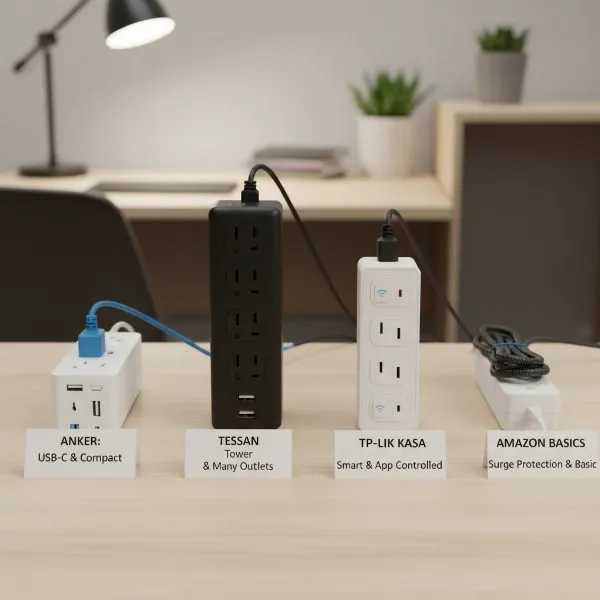
Anker Power Strip Surge Protector (with USB Ports): Anker is well-regarded for its charging solutions, and their power strips often combine surge protection with fast USB charging capabilities. These are typically more compact than larger surge protectors.
- Pros: Good surge protection, multiple USB charging ports, often compact and well-designed for desk use.
- Cons: Fewer AC outlets than larger models, USB charging speed might vary by model.
- Ideal Use: Desktops, bedside tables, or small entertainment centers where both AC and USB power are needed.
-
Tessan Flat Plug Extension Cord Power Strip: For situations requiring flexibility and a low-profile design, a flat plug power strip is an excellent choice. The flat plug fits snugly against the wall, allowing furniture to sit closer.
- Pros: Space-saving flat plug, often features multiple outlets and USB ports, good for tight spaces.
- Cons: May not offer the highest level of surge protection found in dedicated surge protectors.
- Ideal Use: Behind furniture, in tight spaces, or for general use where aesthetics and minimal protrusion are important.
Safe Usage and Maintenance of Power Strips
Proper usage and regular maintenance are paramount to ensuring the safety and longevity of your power strips and connected devices. Ignoring these guidelines can lead to overheating, electrical fires, and device damage.
- Avoid Overloading: Never exceed the power strip’s maximum amperage or wattage rating. Overloading is a leading cause of electrical fires. If the power strip feels hot to the touch, or if its circuit breaker trips, immediately unplug it and reduce the load. Only plug in low-voltage electronics; high-wattage appliances should always go directly into a wall outlet.
- No “Daisy-Chaining”: Absolutely avoid plugging one power strip into another power strip, or into an extension cord. This practice, known as “daisy-chaining” or “piggy-backing,” drastically increases the risk of overloading circuits and causing fires. Limit one power strip per wall outlet.
- Proper Placement: Power strips are designed for indoor use only; never use them outdoors. Keep them uncovered and ensure they are not placed under rugs, carpets, or other objects that can trap heat. Adequate ventilation is crucial for heat dissipation.
- Regular Inspection: Periodically inspect your power strips for any signs of damage, such as frayed wires, cracked casings, loose outlets, or scorch marks. Any damaged power strip should be immediately unplugged and replaced. Ensure plugs are fully engaged into the outlets.
- Unplug When Not in Use: When a power strip or its connected devices are not in use, unplugging the strip from the wall outlet can prevent phantom load and reduce potential hazards. Always pull on the plug, not the cord, to prevent damage.
“While power strips offer incredible convenience, they are not a substitute for permanent wiring. Always match the tool’s physical architecture and safety features to your specific electrical needs to prevent hazards.” – ReviewRee.com Admin, Electrical Equipment Technician
Conclusion
Navigating the world of electrical power solutions, from the fundamental wall outlet to the versatile power strip, is crucial for modern living. While wall outlets provide the robust, foundational power connections for your home, power strips offer essential flexibility and expanded capacity to manage your growing array of electronic devices. The key lies in understanding their distinct roles: use wall outlets for high-demand appliances and permanent fixtures, and judiciously select power strips for expanding capacity and adding protection where needed. By assessing your usage, prioritizing safety features like surge protection and circuit breakers, and adhering to safe practices, you can confidently empower your devices while safeguarding your home.
What power challenges are you currently facing that a smart power solution could help you overcome?
Frequently Asked Questions
Can I plug a refrigerator or microwave into a power strip?
No, high-wattage appliances like refrigerators, microwaves, space heaters, and air conditioners should always be plugged directly into a dedicated wall outlet. These appliances draw significant power and can easily overload a power strip, leading to overheating and potential fire hazards.
How often should I replace my surge protector power strip?
Surge protectors have a finite lifespan, as their internal components (MOVs) degrade with each surge they absorb. Most manufacturers recommend replacing surge protectors every 3-5 years, or immediately after a major power surge (like a lightning strike) or if the indicator light shows it’s no longer protecting.
What does “Joules” mean on a surge protector?
The Joule rating on a surge protector indicates the amount of energy it can absorb before failing. A higher Joule number means greater protection for your connected devices. For sensitive electronics, look for a surge protector with a Joule rating of 1000 or higher.