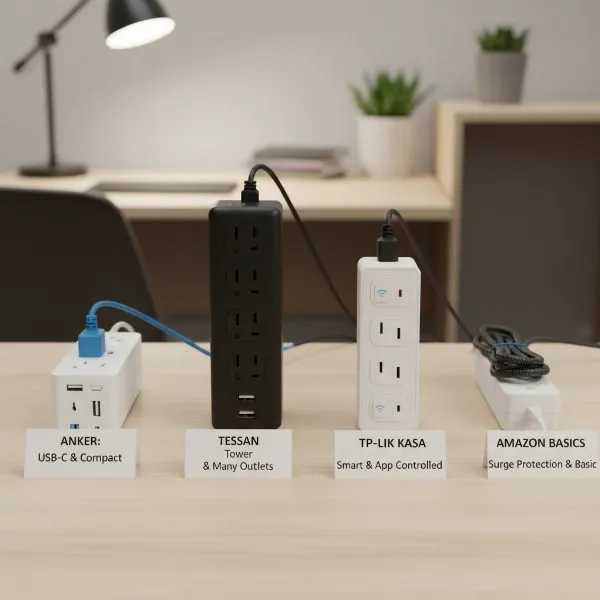
In our increasingly connected world, powering multiple electronic devices often leads to a tangle of wires and a quest for more outlets. It’s a common dilemma: faced with a single wall socket, do you reach for a power strip or an extension cord? While both seemingly solve the problem of limited access to electricity, they are fundamentally designed for different purposes and carry distinct safety considerations. Understanding these differences isn’t just about convenience; it’s crucial for protecting your valuable electronics and, more importantly, ensuring the safety of your home or workspace. This comprehensive guide will dissect the functionalities, features, and optimal uses of power strips and extension cords, empowering you to make informed decisions for your electrical needs.
Power Strips: The Hub for Multiple Devices
A power strip is an electrical device designed to provide multiple electrical outlets from a single wall socket. Essentially, it acts as a distribution hub, allowing you to connect several devices to one power source simultaneously. Its primary purpose is to expand the number of available outlets in a concentrated area, making it ideal for workstations, entertainment centers, or any location where multiple low-power electronics converge.
Modern power strips come equipped with various features that enhance their utility and safety. Many include a built-in surge protector, which safeguards connected devices from sudden voltage spikes that can occur during lightning strikes or power fluctuations. These surges can severely damage sensitive electronics like computers, televisions, and gaming consoles. Additionally, many power strips integrate a circuit breaker that automatically cuts off power if the connected load exceeds a safe amperage, preventing overheating and potential fire hazards. Grounding is another common safety feature, providing an alternative path for electricity in case of a fault. The benefits of using a power strip include organized cable management, centralized power control, and often, critical protection for your valuable gadgets.
However, certain safety rules must be followed. Never “daisy-chain” power strips by plugging one into another, as this can easily overload the circuit and create a significant fire risk. Power strips are also generally not designed for high-power appliances such as space heaters, microwaves, refrigerators, or air conditioners. These devices draw substantial current and should always be plugged directly into a dedicated wall outlet to prevent overloading the power strip and the building’s electrical system.
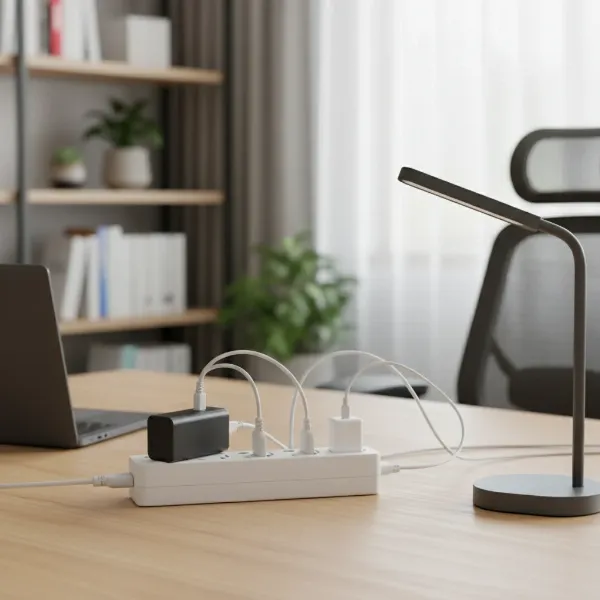 A power strip with multiple electronic devices plugged into it, such as a laptop charger, phone charger, and small lamp, highlighting its function as a central power hub in a home office setting. The image should be realistic and well-lit.
Extension Cords: Reaching the Distance
An extension cord is a flexible electrical cable that effectively extends the reach of an existing wall outlet. Unlike a power strip, its primary function is not to multiply outlets but to provide temporary power to devices that are too far away from a fixed electrical source. Think of it as a temporary bridge for electricity, bringing power closer to where it’s needed.
Extension cords vary significantly in length and thickness, which is indicated by their wire gauge. The gauge number relates inversely to the wire’s thickness: a lower gauge number (e.g., 10-gauge) signifies a thicker wire capable of carrying more current and handling heavier electrical loads, while a higher gauge number (e.g., 18-gauge) indicates a thinner wire suitable for lighter duties. Each extension cord also has an amperage and wattage rating, specifying the maximum electrical current and power it can safely conduct. It is crucial to match these ratings to the power requirements of the device being connected to avoid overheating the cord. The benefit of an extension cord is the flexibility it offers, allowing you to operate tools or appliances in locations where wall outlets are sparse or inconveniently placed.
Safety considerations are paramount with extension cords. They are designed for temporary use only—for hours or days, not weeks or months—and should never be considered a permanent wiring solution. Regular inspection for signs of wear and tear, such as frayed wires, cracked insulation, or damaged plugs, is essential; any damaged cord should be immediately replaced. To prevent overheating, never run extension cords under rugs, carpets, furniture, or through doorways and windows, as this can trap heat and crush the insulation. For devices with three-prong plugs, always use a grounded extension cord, and ensure that outdoor-rated cords are used for any exterior applications, as they feature thicker insulation to resist moisture, temperature variations, and UV rays. Do not attempt to plug multiple high-draw appliances into a single extension cord, even if it has multiple outlets, as this can easily lead to dangerous overloads.
Types of Power Strips
The world of power strips offers a range of specialized options beyond the basic model, each tailored to specific needs and offering enhanced features.
Basic Power Strip
|
Our Picks for the Best Power strip in 2026
As an Amazon Associate I earn from qualifying purchases.
|
||
| Num | Product | Action |
|---|---|---|
| 1 | 6 Ft Surge Protector Power Strip - 8 Widely Outlets with 4 USB Ports, 3 Side Outlet Extender with 6 Feet Extension Cord, Flat Plug, Wall Mount, Desk USB Charging Station, ETL,White |

|
| 2 | Power Strip Surge Protector, Olcorife Ultra Thin Flat Plug Extension Cord 5ft, 6 Outlets 3 USB Ports(1 USB C), 3 Sided Outlet Extender for Home Office Travel Dorm Room Essentials, White |
|
| 3 | 6Ft Power Strip Surge Protector - Yintar Extension Cord with 6 AC Outlets and 3 USB Ports for for Home, Office, Dorm Essentials, 1680 Joules, ETL Listed, (Black) |
|
| 4 | Belkin 12-Outlet Surge Protector Power Strip w/ 12 AC Outlets & 8ft Flat Plug, UL-Listed Heavy-Duty Extension Cord for Home, Office, Travel, Computer, Laptop, Charger - 3,940 Joules of Protection |
|
| 5 | Anker Power Strip with 2100J Surge Protector, Outlet Extender, 5ft Extension Cord with Multiple Outlets, 12 AC, 2 USB A,1 USB C Port for 20W, Home Office, Dorm Room Essentials, TUV Listed |
|
| 6 | Surge Protector Power Strip - Nuetsa Flat Plug Extension Cord with 8 Outlets and 4 USB Ports, 6 Feet Power Cord (1625W/13A), 2700 Joules, ETL Listed, Black |
|
| 7 | KMC 6-Outlet Surge Protector Power Strip 2-Pack, 900 Joules, 4-Foot Extension Cord, Overload Protection, Black |
|
| 8 | Wall Charger, Surge Protector, QINLIANF 5 Outlet Extender with 4 USB Charging Ports, 3-Sided 1680J Power Strip Multi Plug Adapter Spaced for Home Travel Office |
|
| 9 | Power Strip, ALESTOR Surge Protector with 12 Outlets and 4 USB Ports, 6 Feet Extension Cord (1875W/15A), 2700 Joules, ETL Listed, Black |
|
| 10 | Surge Protector Power Strip - HANYCONY 8 Outlets 4 USB (2 USB C) Charging Ports, Multi Plug Outlet Extender, 5Ft Braided Extension Cord, Flat Plug Wall Mount Desk Charging Station for Home Office ETL |
|
A basic power strip simply provides multiple outlets from a single wall socket. It offers convenience by multiplying available receptacles but typically lacks advanced protection features like surge suppression. These are suitable for low-power devices that don’t require protection from voltage spikes, such as chargers for mobile phones, small lamps, or light-duty electronics in a controlled indoor environment. While affordable and widely available, they offer minimal protection against electrical irregularities.
Surge Protector Power Strip
This is perhaps the most common and recommended type for sensitive electronics. A surge protector power strip not only offers multiple outlets but also includes circuitry designed to divert excess voltage away from connected devices during a power surge. The effectiveness of surge protection is often measured in joules; a higher joule rating indicates greater protection capacity. These are indispensable for computers, home theater systems, gaming consoles, and any expensive equipment vulnerable to power fluctuations.
Smart Power Strip
Smart power strips elevate convenience and energy management. Equipped with Wi-Fi connectivity, these strips allow users to control individual outlets or groups of outlets remotely via a smartphone app or voice commands. Many also offer scheduling features, energy monitoring, and compatibility with smart home ecosystems (like Amazon Alexa or Google Assistant). They are ideal for smart homes or offices looking to conserve energy and manage devices with greater flexibility, though they come at a higher price point.
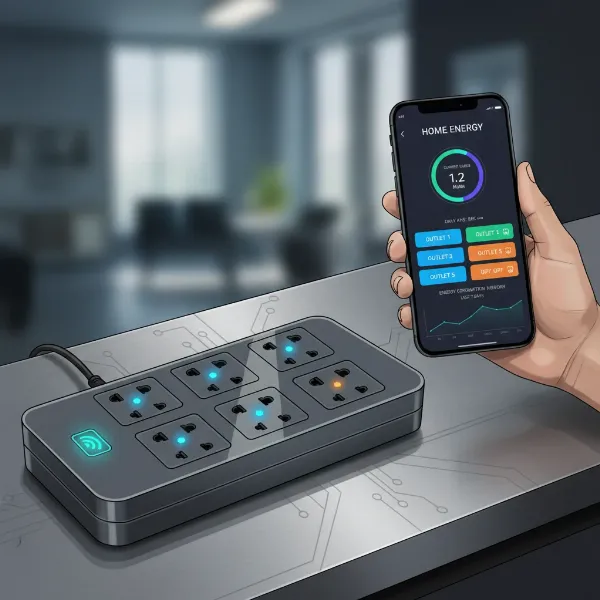 A smart power strip with individual outlets, displaying Wi-Fi indicators, and a smartphone screen nearby showing a control app for the power strip, emphasizing remote management and energy monitoring features.
USB Power Strip
Recognizing the prevalence of USB-powered devices, many power strips now integrate dedicated USB charging ports (both Type-A and Type-C). These eliminate the need for bulky USB wall adapters, freeing up traditional AC outlets and streamlining charging stations. USB power strips are perfect for bedrooms, offices, or travel, where multiple smartphones, tablets, and other USB-powered gadgets need to be charged simultaneously.
Travel Power Strip
Designed for portability, travel power strips are compact, lightweight, and often feature a flat plug and short cord for easy packing. Many include universal outlets to accommodate different plug types found internationally, along with USB charging ports. They are invaluable for travelers who need to power multiple devices with limited hotel room outlets, providing convenience and often basic surge protection on the go.
Types of Extension Cords
Extension cords are categorized primarily by their intended use (indoor/outdoor), duty rating (light, regular, heavy), and wire gauge, which dictates their capacity to carry electrical current.
Indoor Extension Cords
These are generally light- to medium-duty cords, typically ranging from 6 to 15 feet in length. They are designed for use with low-power indoor appliances like lamps, clocks, radios, and small electronics. Indoor cords usually have thinner insulation (higher gauge numbers like 18 or 16 AWG) and are not built to withstand outdoor elements.
Outdoor Extension Cords
Built for durability and resistance to environmental factors, outdoor extension cords feature thicker, weather-resistant insulation that can endure moisture, extreme temperatures, and UV exposure. They are typically heavy-duty, with lower wire gauges (16 to 10 AWG) and higher amperage ratings to support power tools, outdoor lighting, and gardening equipment. Outdoor cords almost always have three-prong grounded plugs for added safety.
Indoor/Outdoor Extension Cords
Some versatile cords are rated for both indoor and outdoor use. These offer a balance of durability and flexibility, making them suitable for a broader range of temporary applications, both inside and outside the home. Always check the cord’s jacket for specific “W” (weather-resistant) or “O” (oil-resistant) ratings to confirm its suitability.
Wire Gauge and Duty Rating
Extension cords are also classified by their duty level, which correlates directly with their wire gauge:
- Light-duty cords (18-16 AWG) are for small household appliances (5-7 amps).
- Medium-duty cords (16-14 AWG) handle general-purpose appliances and tools (10-13 amps).
- Heavy-duty cords (14-10 AWG) are required for power-hungry tools and larger appliances (15-20+ amps). Remember, the longer the cord, the thicker the wire (lower gauge) needed to prevent voltage drop and overheating for the same load.
Power Strip vs. Extension Cord: A Direct Comparison
Understanding the fundamental differences between these two essential electrical accessories is critical for safe and efficient power management. Here’s a comparative overview:
| Feature | Power Strip | Extension Cord |
|---|---|---|
| Primary Function | Provides multiple outlets from a single source | Extends the reach of a single power outlet |
| Outlet Count | Typically 3-12+ outlets | Usually 1-3 outlets |
| Safety Features | Often includes surge protection, circuit breaker, grounding | Generally lacks surge protection; some heavy-duty have fuses; grounding for 3-prong |
| Intended Use | Multiple low-power devices in one location | Single device or a few low-power devices over a distance |
| Permanence | More semi-permanent for organized setups | Strictly temporary use (hours/days) |
| Device Compatibility | Computers, TVs, chargers, small electronics | Power tools, outdoor equipment, temporary lights |
| Overload Protection | Built-in circuit breaker often present | Minimal to none (unless specific heavy-duty types) |
“The biggest mistake people make is using an extension cord as a permanent solution or overloading a power strip with high-wattage appliances. Each tool has a specific job, and respecting that is key to electrical safety.” – John Smith, Master Electrician and Electrical Safety Consultant.
Choosing the Right Tool for the Job
Selecting between a power strip and an extension cord, or choosing the right type of each, involves a careful assessment of your specific needs and a consideration of critical technical factors.
Assess Your Needs
First, determine the number of outlets required and the type of devices you intend to connect. Are they low-power electronics like phone chargers and lamps, or high-draw appliances such as power tools or heating elements? Consider the location—indoors or outdoors—and the duration of use. If you need multiple outlets in a permanent setup for sensitive electronics, a surge protector power strip is likely your best bet. If you only need to bridge a gap temporarily for a single device, an extension cord is appropriate.
Technical Considerations
- Power Requirements: Always check the amperage and wattage ratings of your devices and ensure that your chosen power strip or extension cord can safely handle the combined load. For surge protectors, a higher joule rating (e.g., 1000+ joules) offers better protection against surges.
- Wire Gauge: For extension cords, match the wire gauge to the device’s power draw and the cord’s length. Remember, a lower gauge number means a thicker, more capable wire, especially important for longer cords and higher-power tools to prevent voltage drop and overheating.
- Safety Standards: Look for products that are certified by nationally recognized testing laboratories, such as UL Listed (Underwriters Laboratories) or ETL, ensuring they meet rigorous safety standards. This marking confirms the product has been tested for safety.
Brand, Price, and User Reviews
While specific brand recommendations fall outside the scope of this general guide, research reputable manufacturers known for quality electrical products. Prices vary significantly based on features, length, and brand reputation. Investing in a slightly more expensive, high-quality product is often a wise decision for safety and longevity. Finally, always consult user reviews and expert opinions. Real-world feedback can offer valuable insights into a product’s performance, durability, and any potential shortcomings, helping you avoid common pitfalls and make a more informed purchase decision within your budget.
Safe Usage and Maintenance Practices
Proper use and regular maintenance are crucial for the longevity of your power strips and extension cords, and more importantly, for preventing electrical hazards such as fires or shocks.
When using power strips, always plug them directly into a wall outlet. Avoid “daisy-chaining” by connecting one power strip into another, as this severely overloads the electrical circuit. Ensure the power strip’s circuit breaker is functional and reset it if it trips, as this indicates an overload. Place power strips in open areas where they can dissipate heat, never under rugs, behind furniture, or in enclosed spaces. Regularly dust the outlets to prevent dust buildup, which can become a fire hazard.
For extension cords, remember their temporary nature. Unplug and store them neatly when not in use. Never use an indoor extension cord outdoors, and always select the correct gauge and length for the appliance you are powering. Inspect cords regularly for any signs of damage, such as cuts, frayed insulation, or bent prongs. Never use a damaged cord, and avoid attempting to repair it with electrical tape, as this is not a safe solution. Do not run extension cords through water, snow, or excessive moisture. If using a cord outdoors, ensure the connection points are protected from the elements. Always pull the plug, not the cord, when disconnecting.
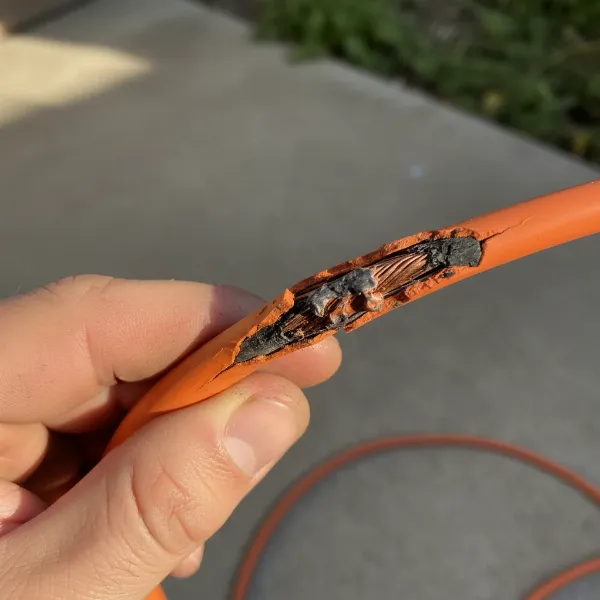 A close-up of a hand inspecting a worn or damaged section of an orange extension cord, showing frayed insulation or exposed wires, emphasizing the importance of regular safety checks.
Conclusion
Navigating the world of electrical accessories can be confusing, but understanding the distinct roles and safety features of power strips and extension cords is paramount. Power strips are your go-to for expanding outlets and protecting sensitive electronics with built-in surge protection and circuit breakers. Extension cords, on the other hand, are the flexible solution for temporarily bridging distances to power individual devices. By recognizing their unique advantages and limitations, you can ensure the safe and efficient operation of your electrical devices, safeguard against potential hazards, and optimize your power setup. Always prioritize safety, match the tool to the task, and remember that informed choices lead to a safer, more organized powered environment.
What are your primary power needs in your home or office, and do you feel confident in choosing the right power solution now?
Frequently Asked Questions
Is a power strip the same as a surge protector?
No, not all power strips are surge protectors. While all surge protectors are typically integrated into a power strip form factor (offering multiple outlets), a basic power strip only provides additional outlets and does not offer protection against voltage spikes. Always check for a joule rating and clear “surge protector” labeling to confirm its protective capabilities.
Can I use an extension cord for a long-term setup?
No, extension cords are strictly designed for temporary use, typically for a few hours or days. Using them as permanent wiring solutions can lead to overheating, insulation damage, and fire hazards. For permanent power needs, a qualified electrician should install additional outlets.