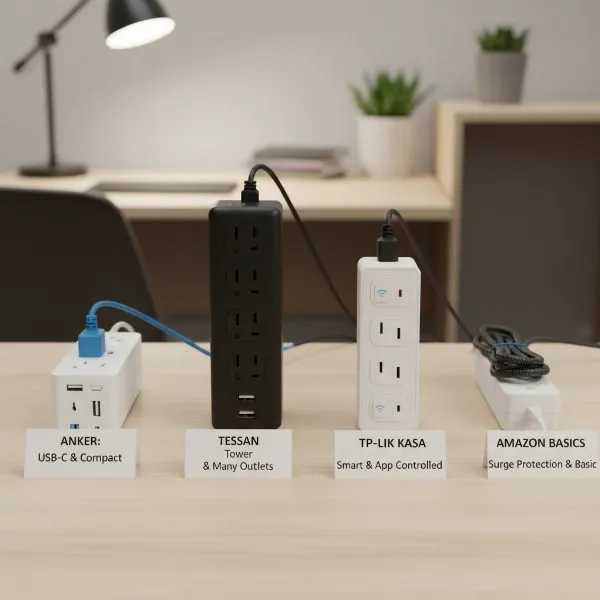
In today’s interconnected world, our homes and offices are filled with valuable electronics, from sophisticated home theater systems to critical computer setups. Protecting these investments from the unpredictable nature of electrical power is paramount. Many people often confuse simple power strips with more advanced power conditioners, assuming they offer the same level of safety and performance enhancement. Understanding the distinct roles of these devices is crucial to safeguarding your gear and ensuring its longevity. This article will clarify the differences between power strips and power conditioners, guiding you through the selection process to find the perfect solution for your specific needs and budget.
What is a Power Strip and Why Do You Need It?
At its most fundamental, a power strip is an extension cord equipped with multiple electrical sockets, sometimes referred to as a multi-socket or power board. Its primary role is to expand the number of available outlets from a single wall socket, offering convenience when you have several devices in proximity. Imagine a tangle of cords behind your entertainment center or office desk; a power strip streamlines this, allowing you to power multiple items from one source.
Basic power strips typically include a built-in circuit breaker, which serves as a rudimentary safety feature. If the connected devices draw too much current, exceeding the strip’s capacity, this breaker will trip, cutting off power to prevent overloads and potential fire hazards. While providing this basic overcurrent protection, a standard power strip does not offer any defense against voltage spikes or “dirty” electricity. Common household devices like lamps, phone chargers, fans, and other low-voltage or non-essential items are often connected to these basic strips.
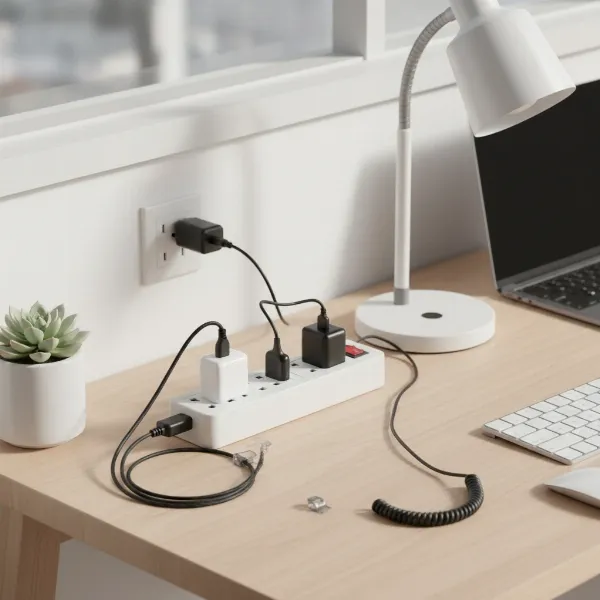 Basic power strip providing multiple outlets for common devices in a home office setting
Exploring the Different Types of Power Protection Devices
The market offers a range of devices designed to manage and protect your electrical connections, each with varying capabilities. Understanding these distinctions is key to making an informed choice.
Basic Power Strip
A basic power strip is primarily a convenience item. It allows you to plug in more devices than a single wall outlet permits, often featuring a simple on/off switch for all connected outlets.
- Pros: Very affordable, provides multiple outlets, and includes a basic circuit breaker for overload protection.
- Cons: Offers no protection against power surges, voltage fluctuations, or electrical noise.
- Applications: Ideal for non-sensitive electronics like desk lamps, phone chargers, small fans, or holiday lights where voltage spikes are not a significant concern.
|
Our Picks for the Best Power strip in 2026
As an Amazon Associate I earn from qualifying purchases.
|
||
| Num | Product | Action |
|---|---|---|
| 1 | 6Ft Power Strip Surge Protector - Yintar Extension Cord with 6 AC Outlets and 3 USB Ports for for Home, Office, Dorm Essentials, 1680 Joules, ETL Listed, (Black) |

|
| 2 | 6 Ft Surge Protector Power Strip - 8 Widely Outlets with 4 USB Ports, 3 Side Outlet Extender with 6 Feet Extension Cord, Flat Plug, Wall Mount, Desk USB Charging Station, ETL,White |
|
| 3 | Belkin 12-Outlet Surge Protector Power Strip w/ 12 AC Outlets & 8ft Flat Plug, UL-Listed Heavy-Duty Extension Cord for Home, Office, Travel, Computer, Laptop, Charger - 3,940 Joules of Protection |
|
| 4 | KMC 6-Outlet Surge Protector Power Strip 2-Pack, 900 Joules, 4-Foot Extension Cord, Overload Protection, Black |
|
| 5 | Surge Protector Power Strip - Nuetsa Flat Plug Extension Cord with 8 Outlets and 4 USB Ports, 6 Feet Power Cord (1625W/13A), 2700 Joules, ETL Listed, Black |
|
| 6 | Wall Charger, Surge Protector, QINLIANF 5 Outlet Extender with 4 USB Charging Ports, 3-Sided 1680J Power Strip Multi Plug Adapter Spaced for Home Travel Office |
|
| 7 | Power Strip Surge Protector, Olcorife Ultra Thin Flat Plug Extension Cord 5ft, 6 Outlets 3 USB Ports(1 USB C), 3 Sided Outlet Extender for Home Office Travel Dorm Room Essentials, White |
|
| 8 | Surge Protector Power Strip - HANYCONY 8 Outlets 4 USB (2 USB C) Charging Ports, Multi Plug Outlet Extender, 5Ft Braided Extension Cord, Flat Plug Wall Mount Desk Charging Station for Home Office ETL |
|
| 9 | Power Strip, ALESTOR Surge Protector with 12 Outlets and 4 USB Ports, 6 Feet Extension Cord (1875W/15A), 2700 Joules, ETL Listed, Black |
|
| 10 | Anker Power Strip with 2100J Surge Protector, Outlet Extender, 5ft Extension Cord with Multiple Outlets, 12 AC, 2 USB A,1 USB C Port for 20W, Home Office, Dorm Room Essentials, TUV Listed |
|
Surge Protector Power Strip
Often mistaken for a regular power strip, a surge protector takes power management a step further by offering crucial defense against voltage spikes. These devices incorporate Metal Oxide Varistors (MOVs) that detect sudden increases in voltage—caused by lightning strikes, utility grid switching, or even large appliances cycling on and off—and divert the excess electricity away from your connected equipment. The effectiveness of a surge protector is measured in joules; a higher joule rating indicates a greater capacity to absorb energy from multiple surges before the protector wears out or fails.
- Pros: Essential protection for valuable electronics against damaging power surges, offering peace of mind.
- Cons: Does not actively “clean” or stabilize the power from minor fluctuations or electrical noise. Its protection capacity degrades over time.
- Applications: A minimum requirement for sensitive electronics such as computers, laptops, televisions, gaming consoles, and home theater components.
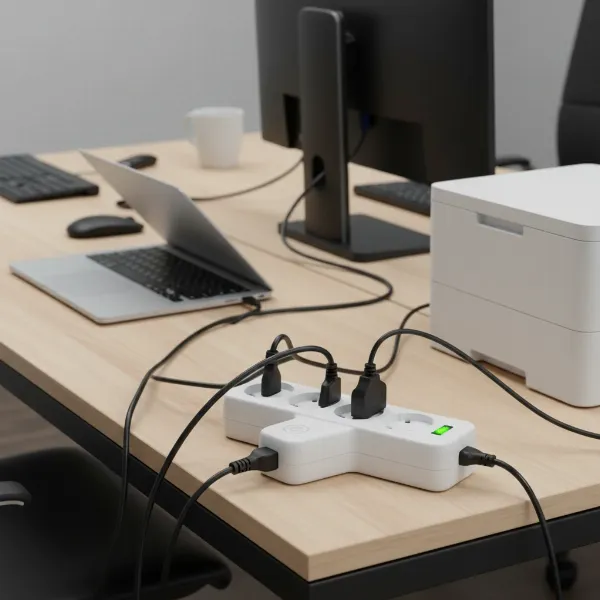 Surge protector safeguarding sensitive electronics from harmful voltage spikes
Power Conditioner
A power conditioner is a sophisticated device designed to do more than just protect against surges; it actively improves the quality of the power delivered to your electronics. These units filter out electrical noise, known as electromagnetic interference (EMI) and radio frequency interference (RFI), and regulate voltage fluctuations (sags and swells) to provide a stable, clean power supply. Many power conditioners also incorporate robust surge protection, effectively combining multiple functions into one comprehensive solution.
- Pros: Provides superior protection against surges, filters out electrical noise, and regulates voltage, leading to enhanced equipment performance, extended lifespan, and reduced audio/video interference.
- Cons: Significantly more expensive than basic power strips or surge protectors, and may be overkill for non-sensitive devices.
- Applications: Indispensable for high-end audio/video systems, recording studios, sensitive laboratory equipment, critical computer servers, and environments where power quality is inconsistent or crucial for optimal performance.
USB Power Strip
These power strips combine traditional AC outlets with integrated USB charging ports. They are designed for modern convenience, allowing you to charge smartphones, tablets, and other USB-powered devices without needing their bulky wall adapters, thereby freeing up AC outlets.
- Pros: Offers convenience by consolidating charging needs, often includes surge protection for AC outlets.
- Cons: USB ports might not provide fast charging for all devices, and the overall power strip may still lack advanced conditioning features.
- Applications: Ideal for bedside tables, desks, or travel where multiple USB devices need charging alongside traditional AC-powered gadgets.
Smart Power Strip
Smart power strips are equipped with Wi-Fi connectivity, enabling remote control, scheduling, and energy monitoring via a smartphone app or smart home assistant. Some advanced models include “master/slave” functionality, where turning off a “master” device (like a TV) automatically switches off peripheral “slave” devices (like a soundbar or gaming console) to save energy.
- Pros: Enhances energy efficiency, offers remote control and scheduling capabilities, provides convenience and smart home integration.
- Cons: More expensive than basic strips, requires Wi-Fi connectivity, and setup can be more complex.
- Applications: Smart homes, offices, or entertainment centers where energy management, automation, and remote access are desired.
Travel Power Strip
Compact and lightweight, travel power strips are specifically designed for portability. They often feature multiple outlets, sometimes with universal compatibility, and built-in USB ports, making them perfect for international trips or simply for use in hotels, airports, or coffee shops.
- Pros: Highly portable, provides multiple outlets and USB ports in a compact form factor, often includes surge protection.
- Cons: Generally has lower power capacity, and may not offer advanced features found in home-based strips.
- Applications: Travelers, digital nomads, or anyone needing to power multiple devices on the go.
Power Protection Devices: A Comparative Overview
Choosing the right power device depends heavily on the equipment you intend to connect and the specific power environment you operate in. Here’s a comparative look at the primary types:
| Feature/Device | Basic Power Strip | Surge Protector Power Strip | Power Conditioner | USB Power Strip | Smart Power Strip | Travel Power Strip |
|---|---|---|---|---|---|---|
| Functionality | Outlet expansion | Outlet expansion, surge protection | Outlet expansion, surge protection, noise filtering, voltage regulation | Outlet expansion, USB charging, surge protection | Outlet expansion, smart control, energy monitoring, surge protection | Outlet expansion, USB charging, portable, surge protection |
| Key Protection | Overcurrent breaker | Overcurrent, voltage spikes (joule rating) | Overcurrent, voltage spikes, sags, swells, EMI/RFI noise | Overcurrent, voltage spikes (AC outlets) | Overcurrent, voltage spikes (AC outlets) | Overcurrent, voltage spikes |
| Power Quality Imp. | None | None | High (cleans & stabilizes power) | Low to None (depends on model) | Low to None (depends on model) | Low to None |
| Typical Cost | Low | Medium | High | Medium | Medium to High | Medium |
| Best For | Non-sensitive items | Computers, TVs, consoles | High-end audio/video, sensitive lab/medical equipment, unstable power environments | Charging multiple USB devices and basic AC devices | Automated energy management, smart homes | On-the-go charging and power needs |
Your Guide to Choosing the Right Power Protection
Making the best decision involves carefully assessing your individual needs and understanding the technical aspects of each device.
Assess Your Usage Needs
Start by evaluating what you need to power.
- Number of outlets needed: Count your devices. Will you need extra space for bulky power adapters?
- Type of devices: Are they sensitive electronics (computers, gaming PCs, home theater, professional audio equipment) or less sensitive items (lamps, phone chargers, small kitchen appliances)? Critical, high-value electronics warrant more advanced protection.
- Location and power environment: Do you live in an area prone to lightning, frequent power outages, or noticeable power fluctuations (e.g., flickering lights, buzzing sounds from speakers)? These are signs of “dirty power” that may necessitate a power conditioner.
Technical Specifications to Consider
Delving into the specifications helps differentiate between devices.
- Joule Rating (for surge protectors): A higher joule rating means the device can absorb more energy from surges before failing, offering better protection. Look for ratings of 1000 joules or higher for sensitive equipment.
- Amperage/Wattage Capacity: Ensure the power strip or conditioner can handle the combined power draw of all connected devices. Overloading can trip circuit breakers or, worse, lead to overheating.
- EMI/RFI Filtering: If you have audio or video equipment, look for power conditioners that specify filtering for electromagnetic and radio frequency interference to prevent unwanted noise in your signals.
- Automatic Voltage Regulation (AVR): Some power conditioners offer AVR, which automatically corrects minor voltage sags and swells to maintain a stable output voltage, crucial for sensitive electronics.
- Safety Standards: Always check for certifications from reputable safety organizations (e.g., UL in North America, CE in Europe) to ensure the product meets stringent safety requirements.
Brands and Pricing Insights
The market for power protection is vast, with many reputable brands offering various solutions. Brands like APC, Tripp Lite, CyberPower, Furman (especially for audio conditioning), and Eaton are well-regarded for their quality and reliability. Pricing varies significantly, from under $20 for basic power strips to several hundred or even thousands for high-end power conditioners. Consider your budget, but weigh it against the value of the equipment you’re protecting. Investing in a quality surge protector is often a wise choice for standard valuable electronics, while a power conditioner becomes a justifiable expense for professional-grade gear or situations where pristine power is critical.
“For most general users, a high-quality surge protector offers adequate and essential defense for common electronics. However, true enthusiasts and professionals with delicate, high-performance equipment will genuinely benefit from the clean and stable power a conditioner provides.” – Alex Nguyen, Senior Electronics Technician, ReviewRee.com
Top 3 Recommended Power Protection Solutions
Based on diverse needs and value, here are our top recommendations:
-
For the Everyday User (Robust Surge Protector): We recommend a surge protector with a high joule rating (2000+ joules) and multiple outlets, preferably with widely spaced ports for bulky adapters. This provides reliable protection for your computer, TV, and gaming consoles without the significant investment of a power conditioner. Look for models with indicators that show the surge protection is still active.
- Ideal for: Home offices, entertainment centers with standard electronics.
-
For the Audiophile/Video Enthusiast (Mid-Range Power Conditioner): A mid-range power conditioner offers both surge protection and effective EMI/RFI filtering. These units can noticeably improve sound clarity and picture quality by eliminating electrical noise, providing a cleaner signal to your audio amplifiers, receivers, and high-definition displays. They often include voltage regulation to prevent performance degradation from minor voltage fluctuations.
- Ideal for: Dedicated home theater setups, mid-level audio systems, or sensitive recording equipment where clean power impacts performance.
-
For the Professional/Critical System (High-End Power Conditioner with AVR): For professional recording studios, high-end medical equipment, or critical data servers, a premium power conditioner with Automatic Voltage Regulation (AVR) and advanced multi-stage filtering is essential. These devices deliver consistently stable and ultra-clean power, minimizing any risk of damage, data corruption, or performance issues caused by power irregularities.
- Ideal for: Professional audio/video production, laboratories, sensitive industrial controls, or areas with highly unstable power grids.
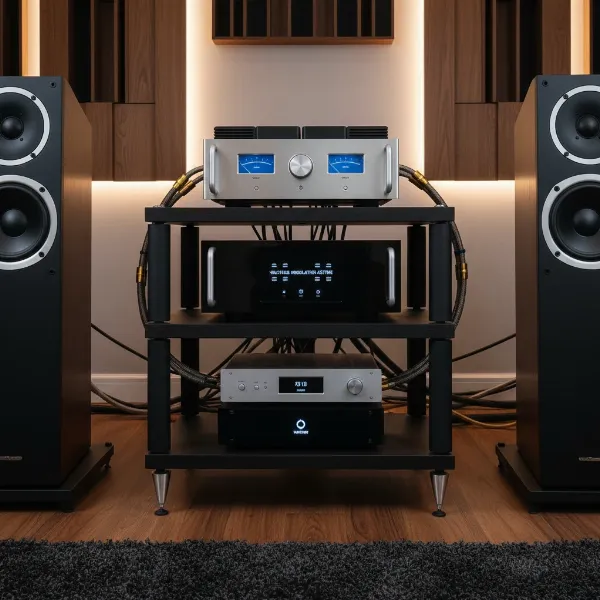 Power conditioner integrated into a high-end audio setup for optimal sound quality
Safe Usage and Maintenance of Your Power Devices
Proper usage and maintenance are critical to ensuring the effectiveness and safety of your power strips and conditioners.
- Avoid Daisy-Chaining: Never plug one power strip or surge protector into another. This practice, known as daisy-chaining, can overload the circuit and negate any protection, posing a severe fire risk.
- Do Not Overload: Be mindful of the total power draw of all devices connected to a single strip or conditioner. Always ensure the combined wattage does not exceed the device’s maximum capacity. If the circuit breaker trips frequently, you are likely overloading the strip.
- Proper Plugging and Unplugging: Always grip the plug, not the cord, when inserting or removing devices. Tug-ging on the cord can damage the wiring and create a safety hazard.
- Monitor Indicator Lights: Many surge protectors have indicator lights to show if the surge protection is active. If this light goes out, it means the surge protection has been compromised, and the device should be replaced.
- Replace Surge Protectors Periodically: Surge protectors have a finite lifespan. Each surge they absorb degrades their protective components. It’s generally recommended to replace surge protectors every 3-5 years, or immediately after a severe power event like a lightning strike, even if the indicator light still shows “protected.”
- Keep Vents Clear: For power conditioners, ensure their ventilation slots are unobstructed to prevent overheating, especially if they contain active cooling components.
Conclusion
Navigating the world of power protection doesn’t have to be daunting. While a basic power strip offers convenient outlet expansion for non-sensitive devices, a surge protector provides essential defense against sudden voltage spikes, which is the minimum recommended for your valuable electronics. For those with high-end audio/video equipment, sensitive computer systems, or in environments with inconsistent power, a power conditioner is the ultimate safeguard, cleaning and stabilizing electricity to ensure optimal performance and extend the lifespan of your gear. Making the right choice hinges on assessing your specific needs and the value of your equipment.
What types of electronics are you looking to protect, and what power challenges do you typically face in your location?
Câu Hỏi Thường Gặp
Is a power conditioner the same as a voltage regulator?
While often integrated, a power conditioner is more comprehensive. A voltage regulator primarily focuses on stabilizing voltage fluctuations (sags and swells), whereas a power conditioner also filters out electrical noise (EMI/RFI) and typically includes surge protection, providing a complete solution for power quality.
Can I plug a power strip into a power conditioner?
It is generally not recommended to plug a power strip (especially another surge protector) into a power conditioner. This practice, known as “daisy-chaining,” can create electrical hazards, potentially reduce the effectiveness of the protection, and lead to overloading. Always plug devices directly into the primary protection unit.
How often should I replace my surge protector?
Surge protectors have a limited life because their internal components (MOVs) degrade with each surge they absorb. It is advisable to replace a surge protector every 3 to 5 years, or immediately after a major electrical event like a lightning strike, even if it appears to be functioning normally.
What is “dirty power” and how does it affect my devices?
“Dirty power” refers to electrical power that deviates from a smooth, consistent sine wave. It can manifest as voltage fluctuations (sags, swells), electrical noise (EMI/RFI), or harmonic distortions. These irregularities can cause electronic devices to perform poorly, experience premature wear, generate audible hums or visual artifacts, and even shorten their lifespan.